Clan Skene/De Skene, Forbes and Douglas Ancestry
Sources:
- Clan Skeen by A.T. (Tom) Skeen, published 1987, Winston-Salem, NC
- Memorials of Family of Skene of Skene, from the family papers, with other illustrative documents by William Forbes Skene, 1809-1892, ed. Published 1887 by Aberdeen
- Descent of the Family of Skene by Henry John Trotter (also available at FamilySearch here and here)
- The Scots Peerage, founded on Wood's edition of Sir Robert Douglas's Peerage of Scotland - containing an historical and genealogical account of the nobility of that kingdom (vol. 6), edited by Sir James Balfour Paul, Lord Lyon King of Arms
- Scots Peerage (vol 4) via Patrick's People - source for the marriage of Sir Alexander Forbes, 1st Lord Forbes and Elizabeth Douglas
- Agnes (Forbes) Skene (1460-1515) | WikiTree FREE Family Tree and pages thereof.
- Clan Forbes
- Clan Douglas
- WikiTree: Category: Clan Skene
- The Church of Jesus Christ of Latter-day Saints, "Ancestral File," database, FamilySearch (https://familysearch.org/ark:/61903/2:1:MZMV-T4H : accessed 30 October 2019), entry for Alexander DE SKENE (GJWG-X4)
- Stirnet.com
- Geni.com: Robert the Bruce (Master Profile) and reputable pages (such as Mary Stewart, Countess of Angus) and sources thereof.
- HumphrysFamilyTree.com: Skene of Skene, Aberdeenshire, Scotland
- Geneanet: Agnes Forbes and ancestry thereof
- The Genealogy of the Most Noble and Ancient House of Drummond by the Honourable William Drummond
- The Descendants of William the Conqueror by Alan G. Freer, Society of Genealogists, London, England
- Burke, John (1787-1848) and Burke, Bernard (1814-1892). The Royal Families of England, Scotland, and Wales: with Their Descendants, Sovereigns and Subjects, Volume I, and The Royal Families of England, Scotland, and Wales: with Their Descendants, Sovereigns and Subjects - line from James Forbes, 2nd Lord Forbes, back to Robert the Bruce
- "Annabella Drummond, Queen of Scotland" - Medievalists.net by Susan Abernethy
- Electric Scotland: The Scottish Nation: Drummond
- History of the Skene Families of Aberdeenshire, Scotland - Michele Bender
- House of Forbes excerpt edited by Henrietta Tayler with contributions from Alistair Tayler and Lord Ivan Nigel Forbes.
- Antoon "Age" Gerard Lubbers, fellow Clan Skene researcher and descendant
- The Bruce Descent Trial from The Lennox Ark:
- And others as listed
Note: Some research needs to be verified. The patrilineal De Skene lineage (including their wives) is verified on pages 1-4 of Clan Skeen by A.T. (Tom) Skeen. The Forbes ancestry is also verified including back to the Douglas and Scottish Royalty. The parentage of Egidia "Gillie" (Keith) Forbes and the ancestry thereof are unverified, though she was of the Keith clan.
← On some pages (like this one), you will need to scroll horizontally to see it all. →
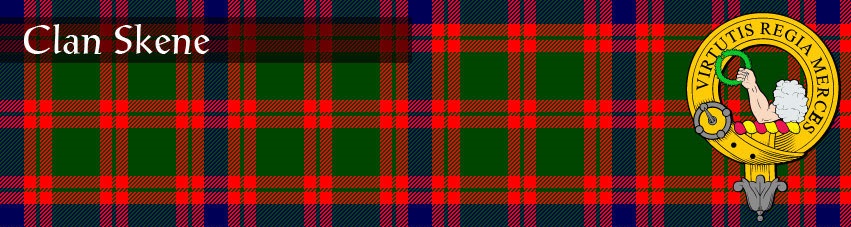
Clan Skene
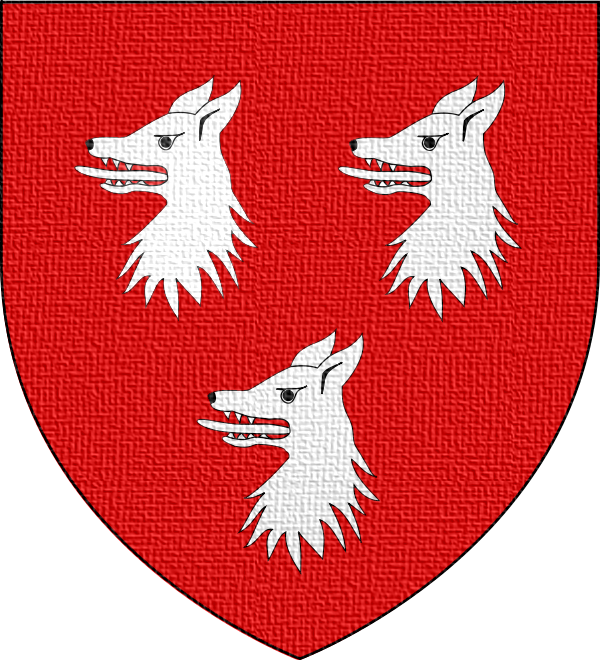
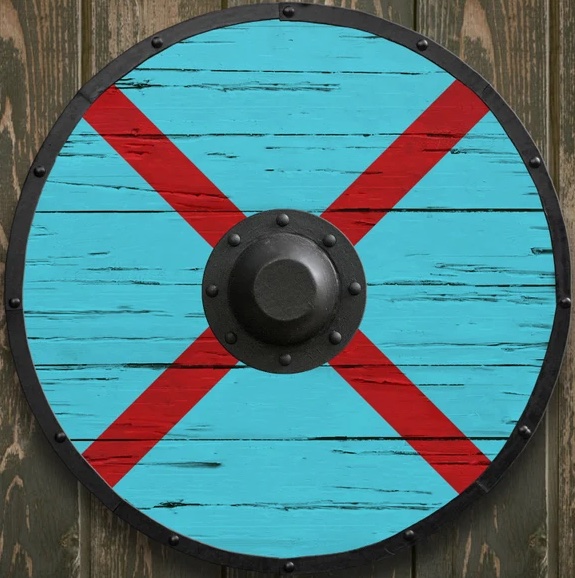
Clan Robertson Shield
(parent of Clan Skene
according to legend)
Skene is of Aberdeenshire and of Highland origin, "a current tradition being that they are descendants of the Clan Donch´, or Robertsons, of Athol" (p. 1, Clan Skeen by A.T. "Tom" Skeen)
"The name of Skene, Skean, Skeen, Skeyne, and there are other possible spellings, is an ancient one in Scotland. According to an old tradition the first to bear the name was the younger, or second son of Robertson of Struan whose claim to fame was an incident in which he saved the life of King Malcom I of Scotland.
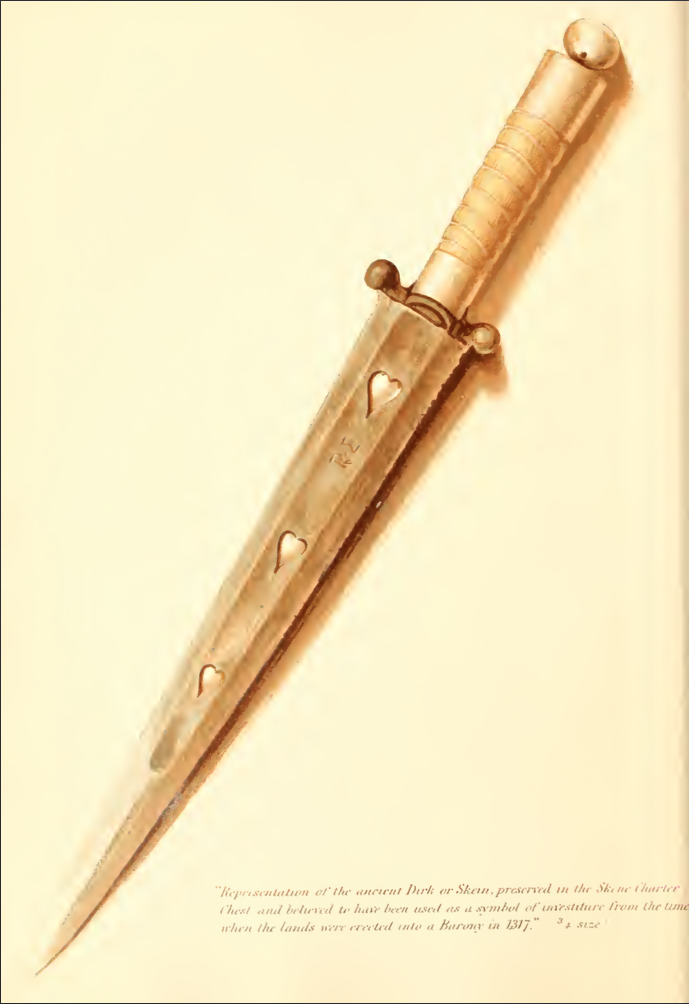
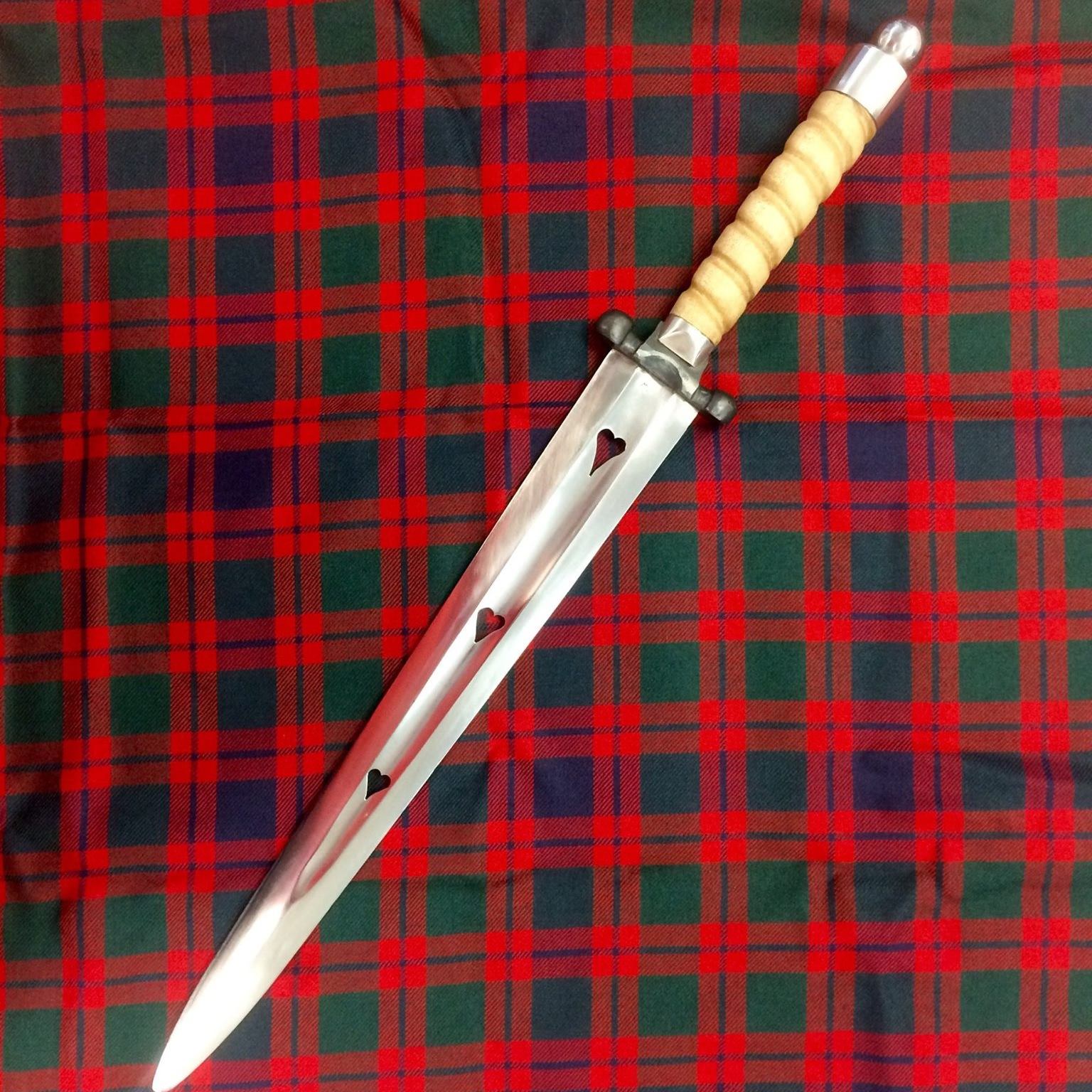
The story goes that, as a wild wolf was about to attack King Malcom, the son of Struan moved in and struck the wolf with his dagger, almost severing the head from the body with his dagger or dirk. The Scot word for dagger is also skene. For this act of valor he was awarded some land in Aberdeenshire, later to be called the lands of Skene, so that we can assume that the family had been of the landed gentry from early times.
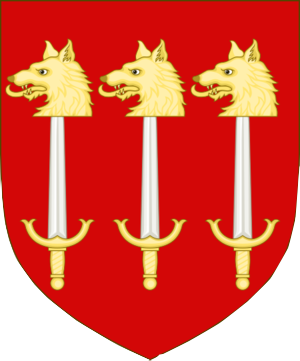
The family arms of Skene were formed from this incident. The escutcheon bears three daggers, or skenes, and three wolf heads above the daggers" (pp. 18-19, Clan Skeen by A.T. "Tom" Skeen). The king involved was none other than my ancestor Malcolm Canmore according to History of the Skene Families of Aberdeenshire, Scotland.
For more information:
|
↓ (scroll here to read all) ↓ Here is a possible origin of the name Skene (besides the sgian meaning dagger or knife), the Scottish territory close to Aberdeen, already named Skene. It might have been called that because of Vikings coming from Sweden and settling close to Aberdeen-port. There is a town called Skene in Sweden and the whole southeastern part of Sweden is a province and the southern tip is a county called Skäne (In Swedish it is the letter a with a zero above it, you pronounce it like the German word for beautiful or lovely: SCHÖNE and that is exactly the translation of it). That word is ofcourse derived from SCANIA. That is how the whole of the northern countries (Norway, Sweden, Finland) together was called in Roman times. Hence, the nowadays used term SCANDINAVIA (combination between Scandia and naval ships). The word SCANDIA has a Roman/Greek origin, SCAENAE (Σαινε) in Greek. Scene, which of course means the stage in a theatre, or place in the middle of an arena, or forum where the players of a drama played their role, is SCENE in English. The Romans sailed their ships (or perhaps their slaves rowed the ships) as far as the southern tip of SCANIA, what they thought was a lovely island with a "beautiful scenery." Hence, Scania, meaning both scenery and beautiful. Source: Age Lubbers, with link added by James "Jamie" Arthur Johnson Also see Stone of Scone under Clan Skene connections to Shakespeare's Macbeth | |
The Realm of Our Family Treasures: Skene Links: Surname, Castle and History (Archived site) |
|
"The Clan Skene", Scotland Magazine, Issue 62 (Archived site) |
|
The story of "Forest of Stocket"
↓ (scroll to read all) ↓
The story of "Forest of Stocket" where the "scene" took place with King Malcolm III (son of the killed King Duncan) being threatend by a wolf and the future Clan Skene second son (hero) killed the wolf with his dagger:
In later days, King Robert the Bruce was very ill and sought protection in Aberdeen-port, when recovered from illness he made a vast donation to the brurgess of Aberdeen called the Freedom Lands: the Forest of Stocket. The Aberdeen inhabitants received not only this vast land but all mills, farms, etc., on it. To the west, its border was the border with the lands that Clan Skene owned. In order to prevent misunderstandings, the Aberdeen inhabitants (and Clan Skene members, perhaps) made the border of the Freedom Lands clearly visible by placing borderstones around the Forest of Stocket and the Freedom Lands (in sixteenth century) -- more than one hunderd stones in total, of which the majority still exists (Refer to March Stones Aberdeen). Unhappily enough, the Clan Skene members forgot to mark the rest of their own territory, which resulted in a legal battle with their eastern neighbors (family of the Keith Marischal) for centuries, spending almost all their money on court proceedings and bringing forth countless wittnesses and counterwitnesses (Memorials..., p. 24), resulting in several court orders sometimes in favor of the Skene clan, but as many times against them, where the Skenes accused their opponents of forgery and fraud, as told by William Forbes Skene.
Source: Age Lubbers, with links for Memorials... and King Robert the Bruce added by James "Jamie" Arthur Johnson
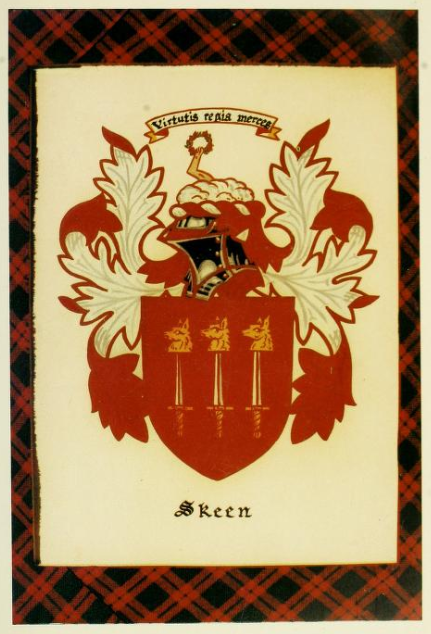
Source: Clan Skeen by A.T. "Tom" Skeen
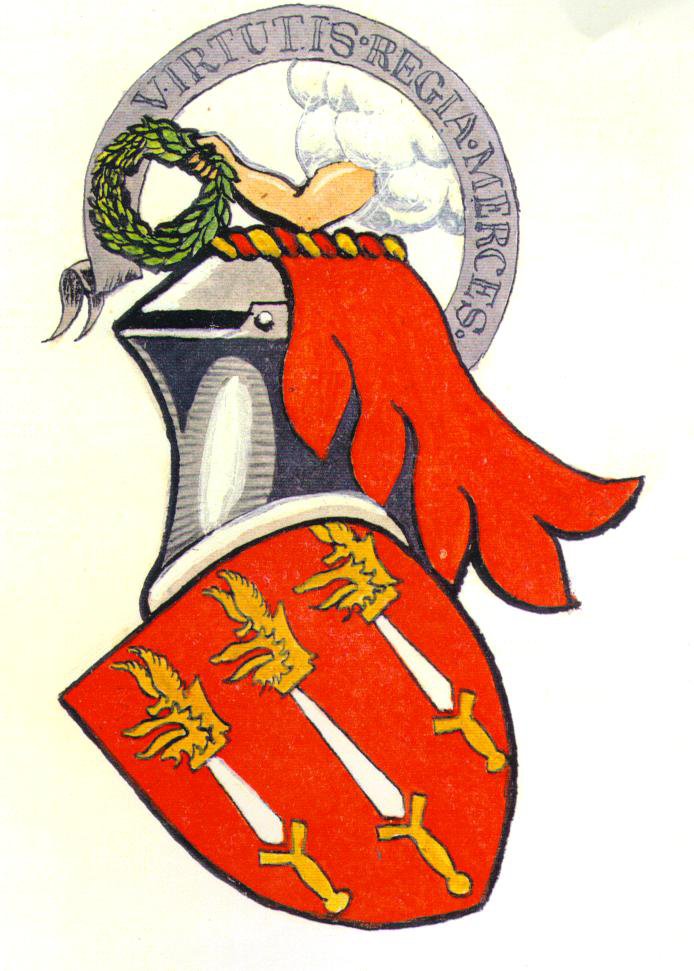
Skene crest and shield below:
"The shield portrays the three sgians (daggers) erect and each piercing a wolf's head. The crest is described as out of a cloud, a dexter (right arm), from shoulder in hand a garland which symbolizes 'Given freely by God.' The motto is 'Virtutis Regia Merces,' which translates into 'virtue the Reward of Bravery.'
The symbolism within the Coat of Arms is as follows:
- Wolf head ............... Symbol of the Warrior
- Sgian (dagger) .......... Military readiness
- Dexter (right arm) ...... Industry
- Laurel garland .......... Triumph
- Red ..................... Magnanimity
- Silver .................. Sincerity
- Gold .................... Generosity"
|
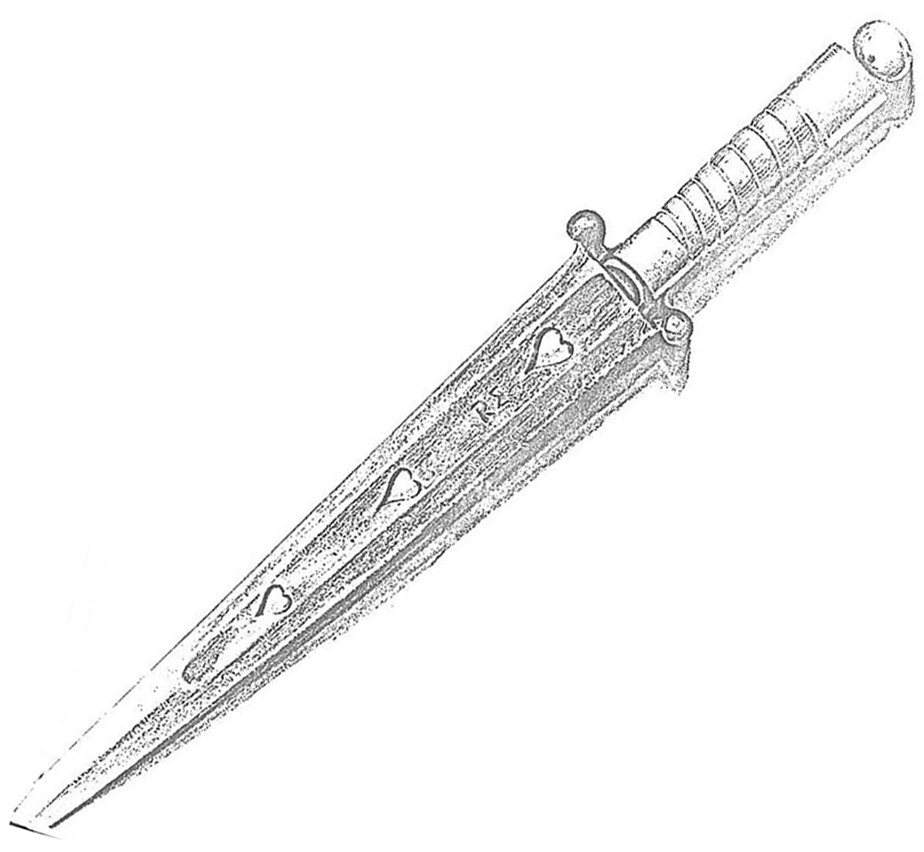
sgian-dubh → |
|
DNA: Mytrueancestry.com compares DNA with ancient samples via Y-DNA (paternal) subclades and I match Clan Donnachaidh (Clan Robertson/Clan Duncan), the parent clan of Clan Skene according to legend.
For fun: Skeens on Pinterest
Clan Skene connections to
Shakespeare's Macbeth
↓ (scroll to read all) ↓
Clan Skene has a historical connection to the events depicted in Shakespeare's Macbeth although the clan itself is not directly mentioned in the play. The connection lies in the historical figures and events that inspired Shakespeare's tragedy.
Historical Context:
The play Macbeth is set in 11th-century Scotland and dramatizes the rise and fall of Macbeth, who becomes king after murdering King Duncan. The historical Macbeth was a real king of Scotland, ruling from 1040 to 1057, and his reign followed that of King Duncan I.
Clan Skene's Legend:
Clan Skene's traditional origin story involves a member of the Robertson clan who saved the life of King Malcolm III by killing a wolf with his dagger. This event is said to have occurred in the Royal Forest of Stocket. Malcolm III was the son of Duncan I, the king whose murder is central to the plot of Macbeth. The clan's name and arms, featuring three wolves' heads, impaled on daggers, commemorate this legendary event.
Shakespeare's Depiction:
Shakespeare's play is a fictionalized account that draws on historical figures but takes significant creative liberties. The play presents Macbeth as a tyrant who murders King Duncan to seize the throne, driven by ambition and the prophecies of three witches. This portrayal is not historically accurate and was likely influenced by the political climate of Shakespeare's time, particularly the reign of King James VI and I, who was a descendant of Malcolm III through the House of Bruce and the House of Stewart.
William Forbes Skene:
William Forbes Skene, a notable member of Clan Skene, was a Scottish historian and writer who contributed to the understanding of Scottish history and clan genealogies. His works, such as Chronicles of the Picts and Scots, provide insights into the historical context of the period depicted in Macbeth.
In summary, while Clan Skene is not directly featured in Macbeth, the clan's legendary origins are intertwined with the historical figures and events that inspired Shakespeare's play. The clan's connection to King Malcolm III, the son of King Duncan, places them within the broader historical narrative that Shakespeare dramatized.
Source: Age Lubbers, with various links added by James "Jamie" Arthur Johnson
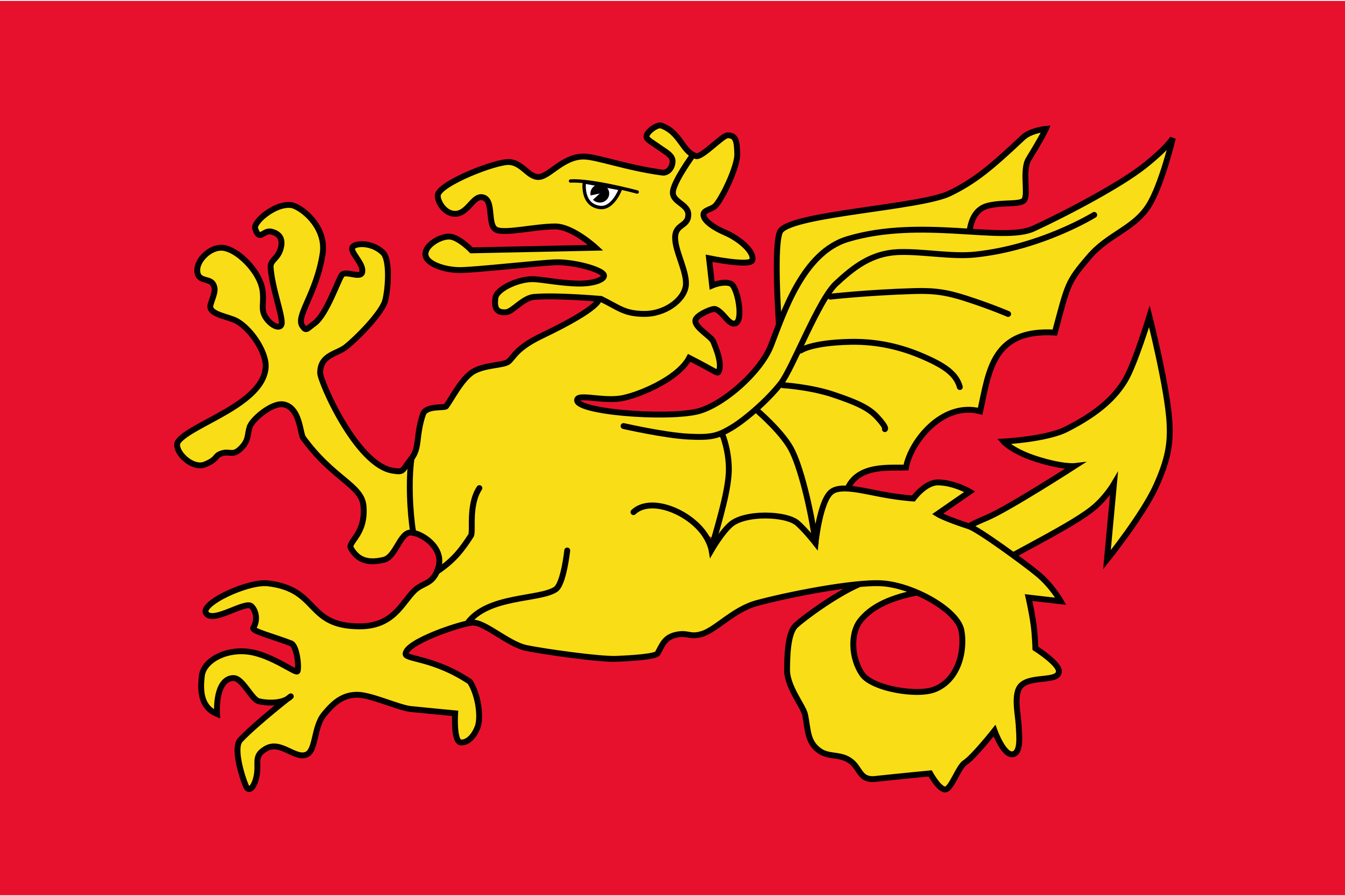
I (James "Jamie" Arthur Johnson) will add another (and certain) connection from Clan Skene to MacBeth: My ancestor Agnes (Forbes) Skene is daughter of James Forbes, son of Elizabeth/Mary (Douglas) Forbes, daughter of Princess Mary Stewart Douglas, daughter of King Robert III (John Stewart) and Annabella Drummond. Both King Robert III and Annabella trace back to Malcolm III "Canmore", son of Dunstan who was slain by MacBeth. King Robert III's father King Robert II further traces back to Malcolm through both parents -- Walter, Steward of Scotland, and Marjorie Bruce, daughter of King Robert the Bruce. Further, Robert the Bruce traces back to Malcolm through both of his parents -- Robert De Brus, Earl of Carrick, and his wife Margaret/Marjory, Countess of Carrick. Eventually, as seen on my website, all the Wyvern flags follow lines back to Alfred the Great through Saint Margaret, wife of Malcolm "Canmore". So, if one follows those flags, one gets to St. Margaret, her husband Malcolm III "Canmore" and his father Duncan. So, through the slain Duncan's son Malcolm III "Canmore" we eventually get to Agnes (Forbes) Skene through multiple lines.
Stone of Scone
Age Lubbers explained about the possible origin of either the territorial or the clan name Skene from the town of Skene in Sweden and the province of Skone in Sweden. Now we turn to the extra intriguing part of the story, though there's no real evidence (and caution must be used):
Prince Charles was crowned as King of England, recently, as tradition prescribed "on the Stone of Scone" (and in the throne of Scone). This Stone of Scone is a very old "throneshaped" stone, stolen by the English from the Scottish who used it to crown their kings in the Middle Ages. The stone was found in the ruins of the castle of Macbeth. That castle was called Scone Castle (near Perth, Scotland). When workers were digging, the soil caved in and they fell into a pit where they found themselves in the cellar of the castle. There they found the stone or throne of Scone, which was hidden there by (presumably) Macbeth. NOTE: This story needs further investigation as any connection with the Clan Skene is uncertain.
Wikipedia article "Stone of Scone" has the following:
"A letter to the editor of the Morning Chronicle, dated 2 January 1819, states:
On the 19th of November, as the servants belonging to the West Mains of Dunsinane-house, were employed in carrying away stones from the excavation made among the ruins that point out the site of Macbeth's castle here, part of the ground they stood on suddenly gave way, and sank down about six feet, discovering a regularly built vault, about six feet long and four wide. None of the men being injured, curiosity induced them to clear out the subterranean recess, when they discovered among the ruins a large stone, weighing about 500 lb [230 kg], which is pronounced to be of the meteoric or semi-metallic kind. This stone must have lain here during the long series of ages since Macbeth's reign. Beside it were also found two round tablets, of a composition resembling bronze. On one of these two lines are engraved, which a gentleman has thus deciphered. -- 'The sconce (or shadow) of kingdom come, until Sylphs in air carry me again to Bethel.' These plates exhibit the figures of targets for the arms. From time immemorial it has been believed among us here, that unseen hands brought Jacob's pillow from Bethel and dropped it on the site where the palace of Scoon now stands. A strong belief is also entertained by many in this part of the country that it was only a representation of this Jacob's pillow that Edward sent to Westminster, the sacred stone not having been found by him. The curious here, aware of such traditions, and who have viewed these venerable remains of antiquity, agree that Macbeth may, or rather must, have deposited the stone in question at the bottom of his Castle, on the hill of Dunsinane (from the trouble of the times), where it has been found by the workmen. This curious stone has been shipped for London for the inspection of the scientific amateur, in order to discover its real quality.[1]”
1 "The stone of Destiny". ↗ English Monarchs. www.englishmonarcs.co.uk. 2004-2005. Retrieved 30 August 2014.
"Tradition tells us that the name Skene dates back to the seventh century. From all reliable counts the family named Skene was a sept of an early clan called Dannacihaidh, or Doncga who later became Duncan and in even later times adopted the name Robertson. Historian, W. F. Skene, Esq., F.S.A., &c. furnishes several corroborative proofs of this. Skene seems to have long existed as a territorial appellation; hence the prefix de, applicable to place and le being always personal. John le Skene signed the Ragman's Roll, a bond of submission to King Edward I of England, in 1296. He was probably the son of Duncan of the Isles. Duncan's son, Patrick, signed the document in the same year. His grandson Robert got a charter of the land of Skene and a Baronage from King Robert the Bruce in 1317. The Baronage continued until 1824, when George Skene the 21st Baron of Skene died without issue."
Source: Clan Skene Website (no longer in existence, but archived version available).
Notable Dates in Scottish History
"The first documented member of the family was John de Skene in 1290, who later swore fealty to Edward I in 1297" (p. 19, Clan Skeen by A.T. "Tom" Skeen) || ↓ Robert De Skene (b. ca. 1257, Scotland, chartered First Baron of Skene - Laird I of Skene - by King Robert the Bruce in 1317 according to Clan Skeen by A.T. "Tom" Skeen, p. 3 |and Marion Mercer (b. ca. 1261, Scotland), the daughter of a Baron of Aldie and Meiklure | ↓ Gillian (Gilian, Giliane) De Skene (de Skene) |(Laird II of Skene) b. ca. 1289 Scotland Not much is known of him, "but his name Gilian, a servant of St. John, suggests a descent from the John de Skene who bore the head of St. John the Baptist on his seal" (Memorials..., p. 15) | ↓ Adam De Skene |(Laird III of Skene) b. ca. 1321 Scotland "He is mentioned ... as grandson of Robert de Skene, and ancestor of the subsequent lairds of Skene" (Memorials..., p. 15) | ↓ Adam II (Laird IV of Skene) De Skene b. ca. 1353 Scotland | | ↓ |
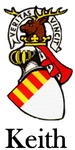
___ Keith, Earl Marishal of Scotland || ↓ |
Radulphus (Ruffus) de Kinnaird
d. before 1214 |
| ↓ ?? de Kinnaird
|
| ↓ Richard de Kinnaird
d. before 1249 |
| ↓ Radulphus de Kinnaird
|
? ↓ Sir Richard de Kinnaird
d. 1306 |
| ↓ Ralph de Kinnaird
|
| ↓ Richard de Kinnaird
ca. 1368 |
| ↓ Sir Richard Kinnaird
d. before 1399 |
| ↓ |
Clan John De Forbes |b. ca. 1176 Forbes, Aberdeen, Scotland | ↓ Ferglx De Forbes |b. ca. 1226 Forbes, Aberdeen, Scotland | ↓ Alexander De Forbes |b. ca. 1256 Forbes, Aberdeen, Scotland d. after 1304 Murray, Scotland | ↓ Alexander De Forbes |b. ca. 1286 Forbes, Aberdeen, Scotland | ↓ |
Forbes 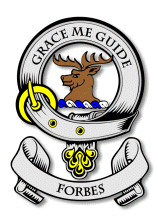
Motto: Grace, me guide War Cry: "Lonach" (A mountain in Strath Don) District: Aberdeenshire Plant badge: Broom Pipe music: March "Cath Ghlinn Eurainn" ("The Battle of Glen Eurann"). Gaelic name: Foirbeis The name Forbes is from the Gaelic term "forb-ais" means "at the land". Originally the name was pronounced as two syllables sounding like "For bays" but that is largely lost. Established in Aberdeenshire on the banks of the river Don, they had been there long before being raised to a barony in 1271 by Alexander III. Duncan de Forboys paid homage in 1296 to John Balliol and John Forbes signed the "Ragman Roll" in 1296. The main lines of Forbes were established in the 14th century. Sir John de Forbes of the Black Lip, justiciary in Aberdeenshire, had four sons - William the first of the Pitsligo line, John the ancestor of the Forbes of Polquhoun, Alistair of Brux who established the lines of Skellatar and Inverernan. Sir John's eldest son fought beside the Earl of Mar at the Battle of Harlaw on July 24, 1411, against Donald, Lord of the Isles and became Lord Forbes around 1445. Forbes eventually became the premier lordship of Scotland. James, 2nd Lord Forbes had three sons, the two younger offspring establishing the Forbes of Corsindale and Monymusk and of Craigievar. The Forbes expanded their territory, at one time covering half of the earldom of Mar. However, over the years, there were feuds with the powerful Gordon clan and the Leslies, culminating in two battles and several massacres. Two Acts of the Scottish Parliament were required to force the factions to lay down their arms. King James VI confirmed the Forbes in their lands in 1582 but the cost of the struggles with the Gordons had created debts and much of the Forbes land had to be sold. ... Source: Clan Forbes on WikiTree. |
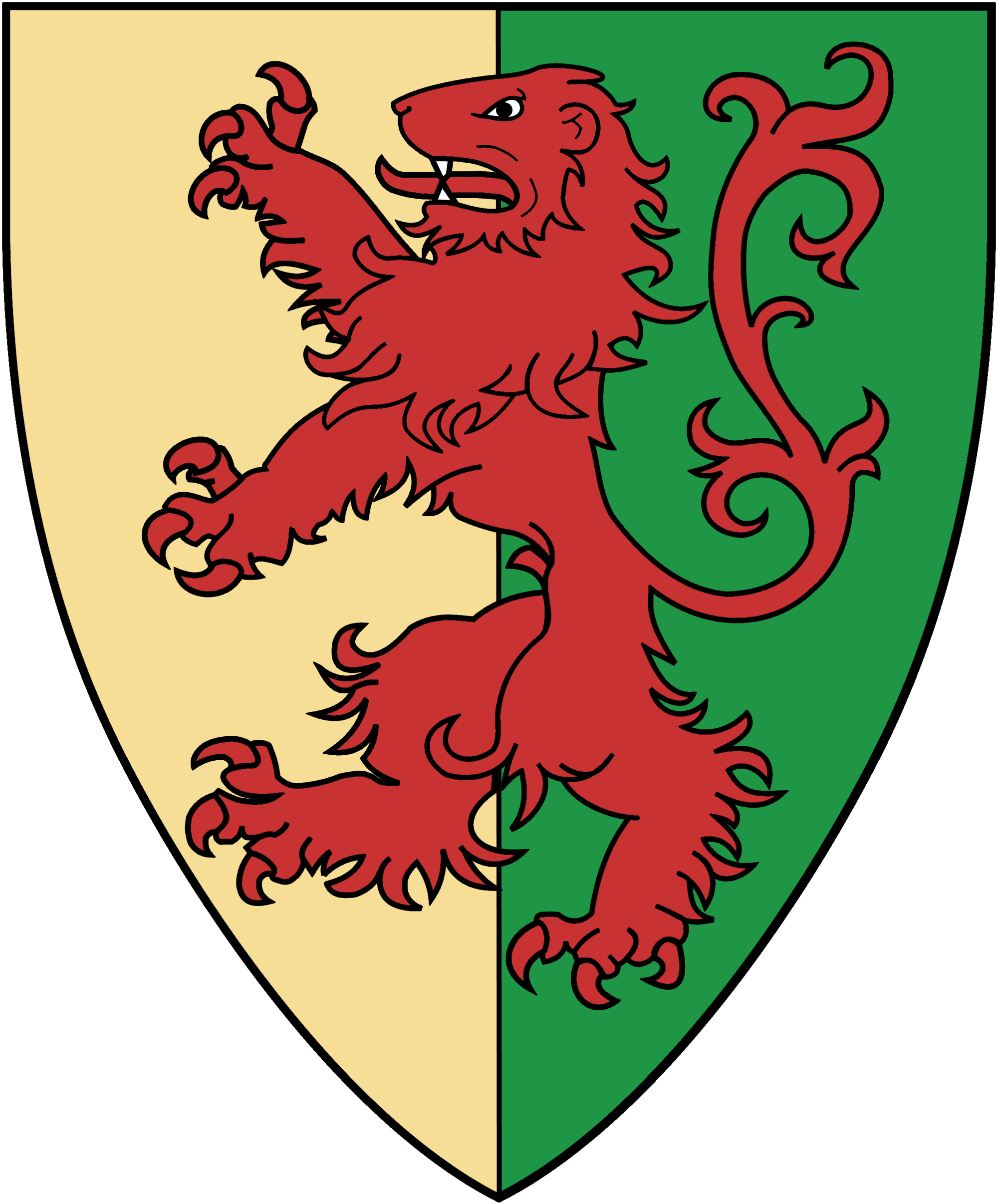
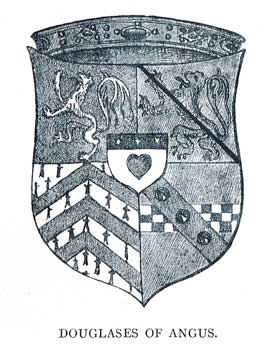
Douglas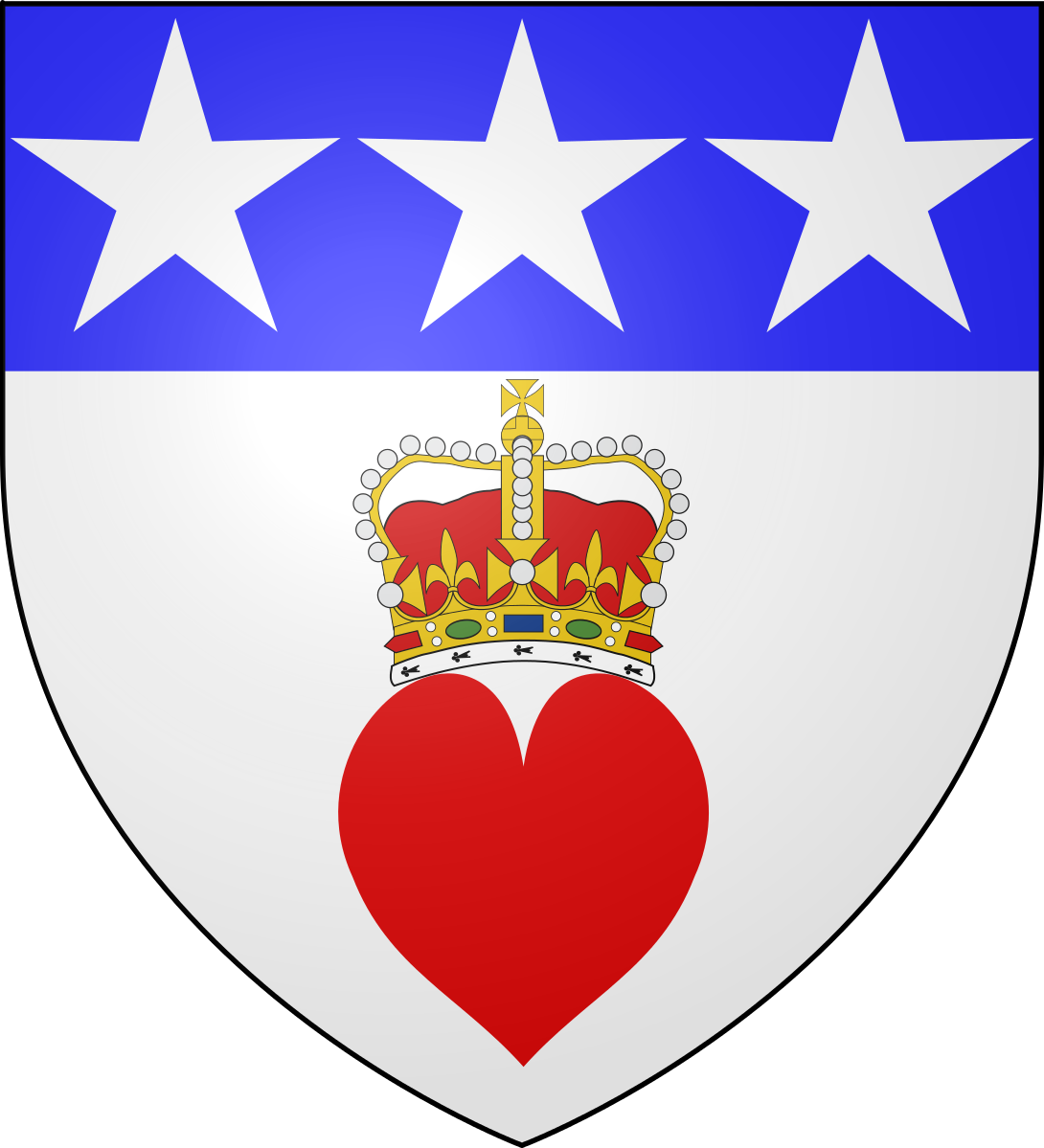 image source  image source
Crest: On a chapeau, a green salamander surrounded by fire |
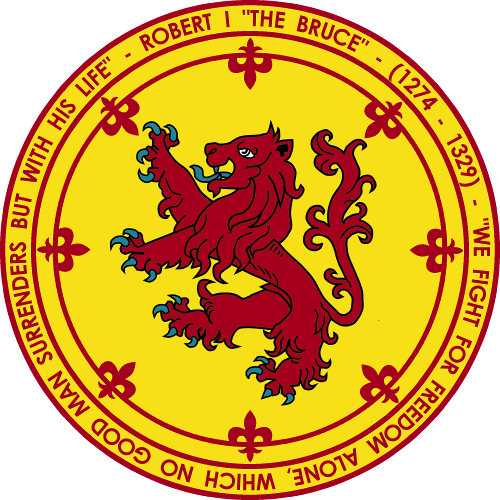      Ancestry through parents Robert II and Elizabeth More (Mure), King and Queen of Scotland ↑ | | |
Ancestry through parents Sir John Drummond, 11th Thane of Lennox and Mary Montifex, Heiress of Stobhall ↑ | | |
Alexander De Synton b. 1255, Synton, Selkirkshire, Scotland ↑
| | |
| ↓ Edward De Keith,
Marischal of Scotland b. ca. 1280, Dunottar, Kincardineshire, Scotland d. 17 October 1346, Battle of Neville's Cross, England Isabella De Synton,
Heiress of Sinton b. ca. 1285, Sinton, Selkirkshire, Scotland m. before July 1305, Sinton, Selkirkshire, Scotland
|
| ↓ |
Ancestry through parents David and Janet (Keith) Hamilton ↑ | | |
Ancestry through parents James and Agnes (Dunbar) Douglas ↑ | | |
||||||||||||||||||||||||||||||||||||||||||||||||||||
| Adam III De Skene (Laird V of Skene) b. ca. 1370, Kirkton of Skene, Aberdeenshire, Scotland d. 24 July 1411, Battle of Harlaw, Scotland (Source: FamilySearch) |
m. before 1392 | Janet Keith b. ca. 1373, Inverness-shire or Marischal, Scotland d. 1426 (Source: FamilySearch) |
Alan Kinnaird (d. before 1436) m. before 1420 Mary Murray (presumed mother of Thomas Kinnaird) |
John De Forbes b. 1302, Forbes, Aberdeen, Scotland d. |
m. ca. 1331 | Margaret Forbes b. ca. 1311, Forbes, Aberdeen, Scotland d. |
William, Earl of Douglas b. ca. 1323, Douglas, Lanarkshire, Scotland d. May 1384 |
not married | Margaret Stewart, Countess of Angus b. 1325, Douglas, Lanarkshire, Scotland d. |
Robert III (John Stewart), KING OF SCOTLAND b. ca. 1337, Dundonald, Ayrshire, Scotland d. 4 April 1406, Rothsay Castle, Dundonald, Ayrshire, Scotland Burial: Paisley, Renfrewshire, Scotland |
m. "The marriage of John Earl of Carrick, and Annabella, daughter of Sir John Drummond of Stobhall, took place at least 20 years before he [John Stewart, Earl of Carrick] ascended the throne of Scotland, by the title of Robert III" (Drummond, p. 272).
"Annabella Drummond, Queen of Scotland" - Medievalists.net by Susan Abernethy "From the weakness and lameness of her husband, Queen Annabella had considerable influence, and supported the whole dignity of the court" (Electric Scotland: The Scottish Nation: Drummond ). |
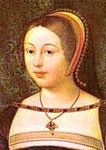 Annabella Drummond b. 1350, Dunfermline, Fife, Scotland d. October 1401, Scone, Perthshire, Scotland (Source: Geni.com) |
William De Keith, knight b. ca. 1315, Dunottar, Kincardineshire, Scotland d. 2 May 1407 or 1410 |
m. ca. 1437 | Margaret Fraser b. ca. 1321, Touch, Fraser, Sterling, Scotland d. before 1410 |
John Hamilton, knight b. ca. 1371, Cadzow, Lanarkshire, Scotland d. 14 September 1402, Battle of Homildon Hill, Nuthumberland, England |
m. November 1388 | Jacoba (Janet) Douglas b. ca. 1379, Dalkeith, Mid Lothian, Scotland d. |
||||||||||||||||||||||||||||||||||||||||||||
| | | | ↓ |
| | | ↓ |
| | | ↓ |
| | | ↓ |
|
| | | ↓ |
|
| | | ↓ |
| | | ↓ |
||||||||||||||||||||||||||||||||||||||||||||||||||||||
| James was the son of Adam who died at Harlaw in 1411 (Memorials..., p. 15). | James De Skene (Laird VI of Skene) b. ca. 1392 Scotland d. 1461 Scotland |
m. before 1413 | Ms. (Elizabeth?) Fraser of Corntoun b. ca. 1396, Corntown, Scotland d. |
Thomas Kinnaird (d. before 5 July 1440) + Egidia De Maravia (Egidia Murray, heiress of Culbin) b. 1395, Kinarde, Scotland d. |
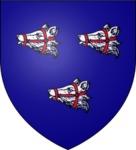 |
John "With The Black Lip" Forbes b. 1332, Forbes, Aberdeenshire, Scotland d. before 20 November 1446, Scotland |
m. ca. 1375 | Elizabeth (Margaret) Kennedy b. ca. 1336, Dunure, Scotland d. |
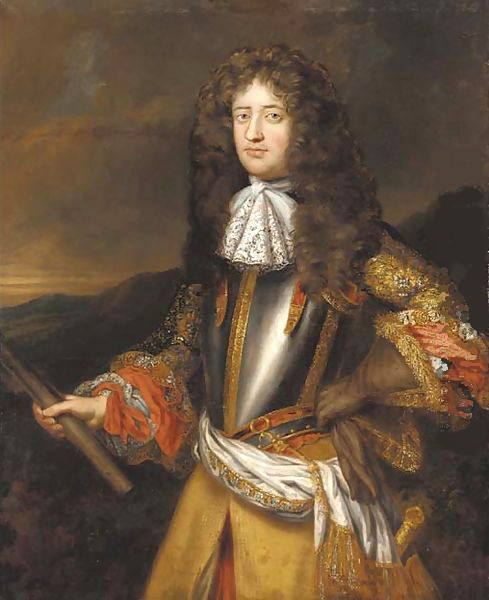 George Douglas, Earl of Angus b. ca. 1376, Mar, Aberdeenshire, Scotland d. after 14 September 1402 from the Bubonic Plague in Lancashire, England, as a captive from the Battle of Homildon Hill where he was wounded 5 times and captured. |
m. 24 May 1397 George Douglas was her third of four husbands.
|
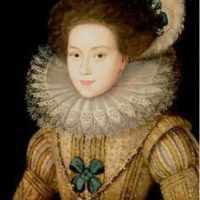 Mary Stewart, Princess of Scotland, Countess of Angus b. ca. 1380, Dunfermline, Fifeshire, Scotland d. 1458 Scotland Burial: Strathblane Chapel, Strathblane, Stirlingshire, Scotland |
Mary's famous brother King James I of Scotland was another child of King Robert III (John Stewart) of Scotland and Lady Annabella Drummond, Queen Consort of Scotland seen above. | Robert Keith, knight b. ca. 1363, Dunottar, Kincardine-shire, Scotland d. before 20 July 1430 |
m. ca. 1379, St. Andrews Diocese, Fifeshire, Scotland | heiress of Troup b. ca. 1363, Troup, Banffshire, Scotland d. |
James Hamilton b. ca. 1393, Cadzow, Lanarkshire, Scotland d. before May 1441 |
m. before 20 October 1422 | Janet Livingstone b. ca. 1400, Callendar, Scotland d. |
||||||||||||||||||||||||||||||||||||||||||||
| | | | ↓ |
| | | ↓ |
| | | ↓ |
| | | ↓ |
|
| | | ↓ |
| | | ↓ |
||||||||||||||||||||||||||||||||||||||||||||||||||||||||
| Alexander De Skene (Laird VII of Skene) b. ca. 1413 Scotland d. 1470 |
m. 12 May 1438 | Mariot(a) Kinarde/Kinnaird b. ca. 1417, Kinarde, Scotland d. |
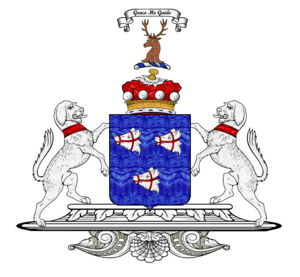 |
Alexander Forbes b. ca. 1380, Forbes, Aberdeenshire, Scotland. He was a baron who fought beside the Earl of Mar at the Battle of Harlaw on July 24, 1411, against Donald, Lord of the Isles, and became Lord Forbes around 1445 (source: Clan Forbes on WikiTree). d. 1448, Aberdeenshire, Scotland. |
m. 16 October 1423
|
 Elizabeth Douglas (She later married a Hay) b. ca. 1398, Mar, Aberdeenshire, Scotland d. |
  |
William Keith He was a lord. b. ca. 1389, Dunottar, Kincardine, Scotland d. 16 May 1463 or 1464 |
m. 26 April 1414 | Mary (or Marjory) Hamilton b. ca. 1400, Hamilton, Lanarkshire, Scotland d. |
||||||||||||||||||||||||||||||||||||||||||||||||||||
| | | | ↓ |
| | | ↓ |
Though she was a Keith, the ancestries of Egidia (Keith) Forbes need verification. → |
| unverfied | ↓ |
|||||||||||||||||||||||||||||||||||||||||||||||||||||||||||
| Gilbert De Skene (Laird VIII of Skene) b. ca. 1440 Scotland d. 1485 |
m. 1481 | Christina Mercer b. in Scotland d. 1490 |
Christina Mercer, wife of Gilbert De Skene, is listed as Christian (Forbes) Mercer according to Ancestry.com, which claims she is daughter of Andrew and Margaret (Drummond) Mercer and had first been married to Duncan Forbes by whom she had son William Forbes (b. 1478) -- all prior to her marriage to Gilbert I de Skene in 1481. According to House of Forbes, excerpt, p. 295, Christian Mercer was a widow of Gilbert Skene of Skene and later married Duncan Forbes. | 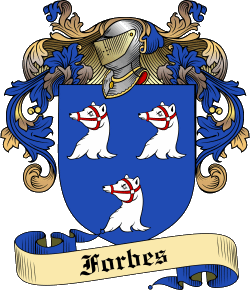 |
James Forbes He was a baron, second Lord Forbes (The Scots Peerage, p. 41). b. ca. 1424, Forbes, Aberdeenshire, Scotland d. ca. 30 September 1460 Scotland Burke and Burke, Volume I, p. 479, and Volume II, p. 435, show the lineage from James Forbes back to Robert the Bruce through James' mother. |
m. | Egidia "Gillie" Keith She was a baroness. b. ca. 1424, Forbes, Aberdeenshire, Scotland d. after ca. 1482 |
|||||||||||||||||||||||||||||||||||||||||||||||||||||||
| | | | | | | | | | | ↓ |
JDA Family Tree (while not necessarily authoritative) indicates Agnes (Forbes) De Skene's parents were William (3rd Lord) Forbes and Christian (Lady) Gordon, William being son of the above James and Egidia (Keith) Forbes. It is known according to Clan Skeen that Agnes was a daughter of Lord Forbes. So, we have JDA Family Tree's claim along with other sources (Stirnet.com and WikiTree) indicating there may be an extra generation between James and Egidia (Keith) Forbes and Agnes (Forbes) Skene. Geni.com Master Profile for William "Gray Willie", 3rd Lord Forbes indicates he did have a sister named Agnes (who married Alexander Skene), daughter of James and Egidia (Keith) Forbes. Memorials of Family of Skene of Skene indicates Agnes (Forbes) de Skene was a daughter of Lord Forbes, probably of James and Egidia (Keith) Forbes, and that she was sister to Duncan Forbes who was guardian of her infant son (p. 23). Either way, it is conclusive that Agnes (Forbes) Skene (below) is either the daughter or granddaughter of James and Egidia (Keith) Forbes, the most reputable sources indicating daughter. |
| | | | | | | | | | ↓ |
||||||||||||||||||||||||||||||||||||||||||||||||||||||||||||
| Alexander De Skene (Laird IX of Skene) b. ca. 1465 in Skene, Aberdeen, Scotland d. ca. 1507 |
m. before 1498 (ca. 1489) | Agnes Forbes b. before 1460 d. 1515 |
||||||||||||||||||||||||||||||||||||||||||||||||||||||||||||
| | | | ↓ descendants through son Alexander De Skene and his wife Elizabeth (Black) De Skene |
The Bruce Descent Trial explores the tie of the Forbes line to the Skene line via this marriage, particularly from the Privy Seal Record, an official Scottish Crown record from The Register of the Privy Seal of Scotland Volume I: A.D. 1488-1529, entry dated 12 February 1507/8. I received a message from the President of Lennox Ark about this: "I already confirmed [Agnes Forbes De Skene] is the daughter of 2nd lord Forbes. Not the 3rd. Her brother Duncan was guardian of her son and their is a charter in the great seal of Scotland charters stating she is his sister and he is the son of 2nd lord Forbes." Also, the Clan Forbes Society, Inc., claims this descent.
|
|||||||||||||||||||||||||||||||||||||||||||||||||||||||||||||
The patrilineal De Skene lineage (including their wives) is verified on pages 1-4 of Clan Skeen by A.T. (Tom) Skeen.